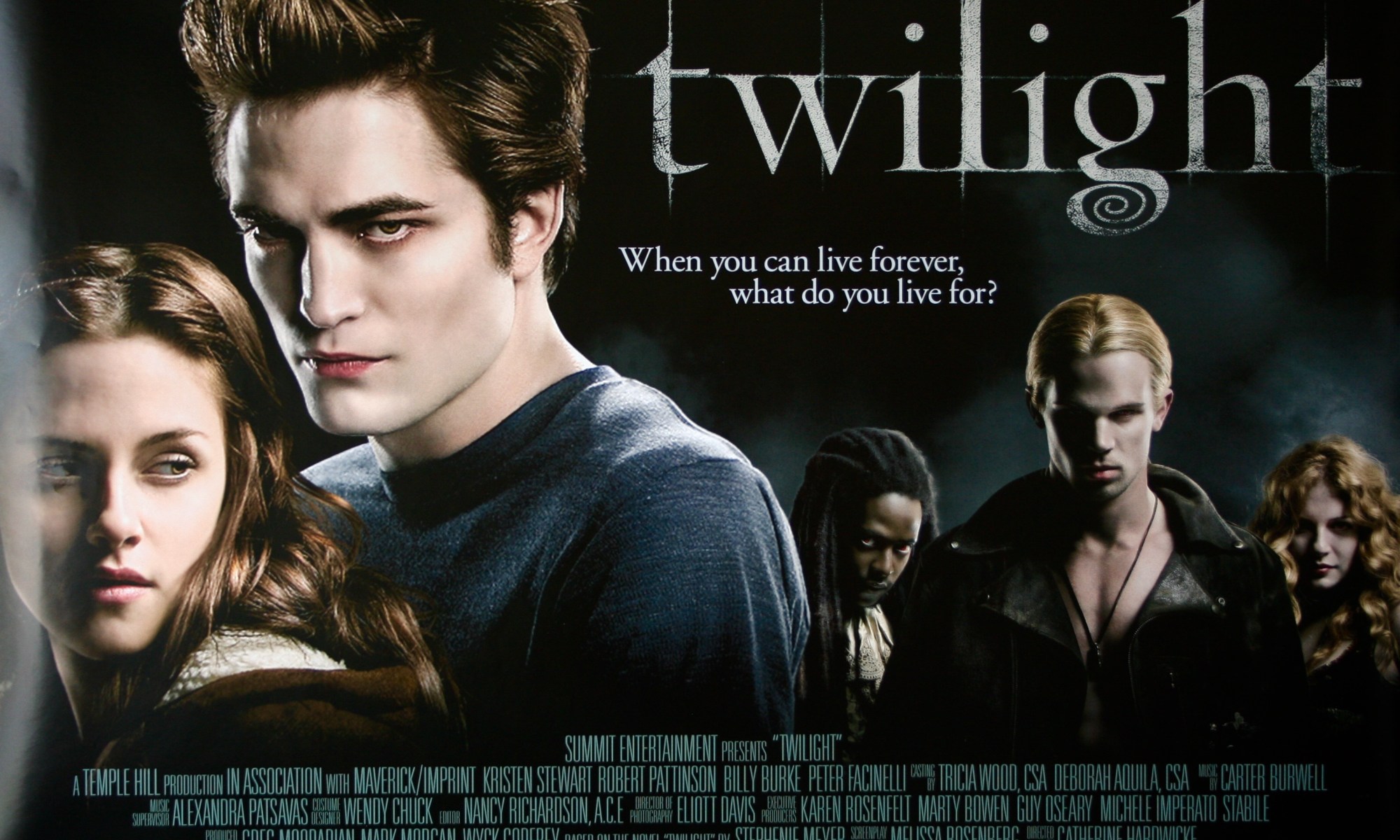

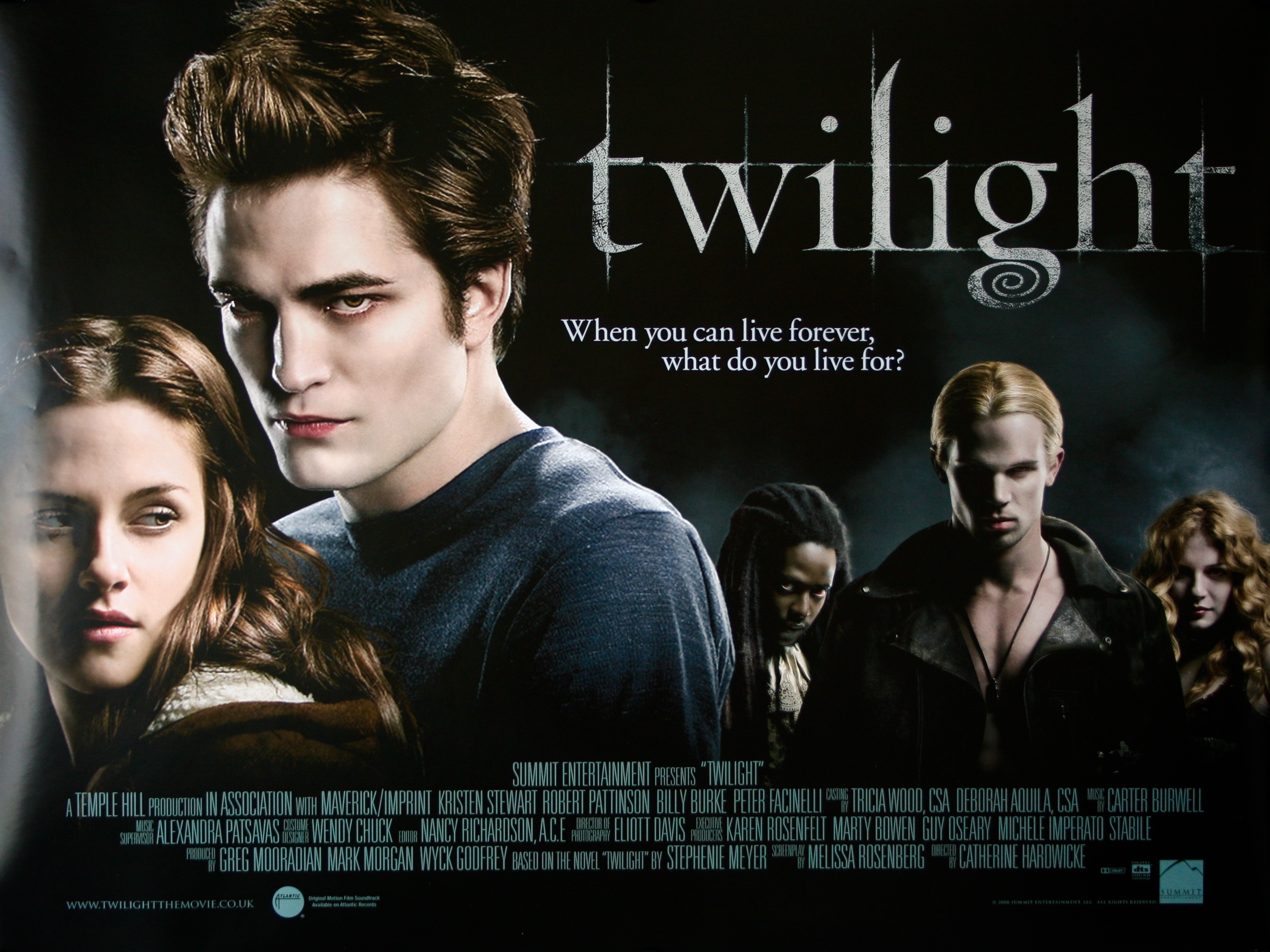
Rupert Christiansen defines a Byronic hero as “a man proud, moody, cynical, with defiance on his brow, and misery in his heart, a scorner of his kind, implacable in revenge, yet capable of deep and strong affection.”1 In Catherine Hardwicke’s Twilight, Edward Cullen (Robert Pattinson) has the traits of a Byronic hero.
Because he is a vampire, Edward has negative feelings toward humans. When he first encounters Bella Swan (Kristen Stewart), he looks at her with contempt, and when she walks into biology class, he covers his mouth as if he might throw up. Bella is anathema to Edward because her human scent arouses his violent nature. Paradoxically, detesting humans is a defense mechanism to control his violent nature. By scorning Bella, he stays away from her, and she is safe from harm.
Edward is a man of emotional extremes. After several days away from Bella, he gains control of his dark emotions and is kind to her. Seeing the stark change in his personality, she tells him, “Your mood swings are giving me whiplash.” In a later scene, he is filled with rage when he rescues Bella from a gang of teenage boys. He says he wants to “go back there and rip those guys’ heads off.” Edward’s emotions are unstable because of his desire for violence which he struggles to control. He tells Bella that he is “a monster” and has “the skin of a killer.” Edward also has unstable emotions because of his self-contempt. He hates being a vampire.
Although Edward has the nature of a monster, he maintains his humanity through his love for Bella. Like a drug addict, he compares his desire for her to heroin. He is drawn to her not only because of her human scent but also because he loves her goodness. She is willing to die to save her mother, and he is willing to die to save her. Edward’s love for Bella helps him control his desire for her blood. When you love someone, you are less likely to cause them harm.
Edward differs from a traditional Byronic hero in one aspect: he is a man of action. According to Peter L. Thorslev Jr., a Byronic hero is marked by an “agonized passiveness.”2 Edward is agonized, but not passive. A vampire since 1918, he has controlled his desire for human blood and only drinks the blood of animals. In the climax of the film, he faces his greatest test: to suck vampire venom from Bella’s wrist without turning her into a vampire. Although he finds it impossible to stop, Carlisle Cullen (Peter Facinelli) urges him to “find the will.” Edward controls his evil nature and saves Bella by exercising his free will.
The author of Twilight, Stephenie Meyer, is a Mormon, and she created a Byronic hero who embodies a Biblical principle: “Hate what is evil; cling to what is good.”3 Edward hates his evil nature, which is the first step in controlling it. If a person hates what is evil, they are less likely to do what is evil. Bella is the good that Edward clings to. In loving and protecting her, he regains the humanity that he lost when he became a vampire.
Notes
1. Rupert Christiansen, Romantic Affinities: Portraits from an Age, 1780-1830 (The Bodley Head Ltd).
2. William R. Harvey, “Charles Dickens and the Byronic Hero,” Nineteenth-Century Fiction 24, no. 3 (December 1969): 306, http://www.jstor.org/stable/2932860
3. Romans 12:9 (New International Version).
 Christopher Lindsay
👍👍
LikeLiked by 1 person
Robert Pattinson could have played Anakin Skywalker.
LikeLiked by 1 person
His publicity shot really has that brooding look fully mastered.
LikeLiked by 1 person