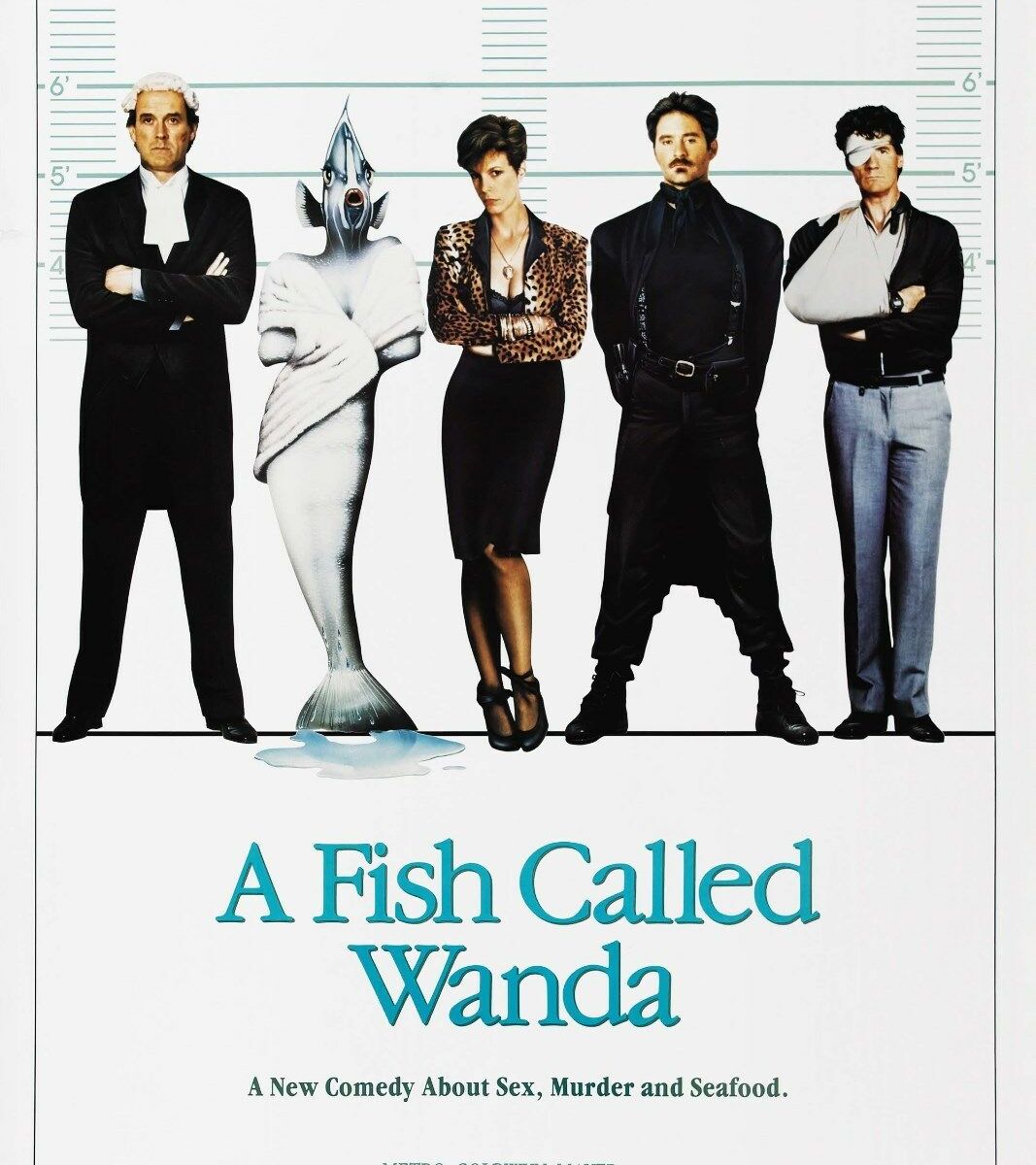

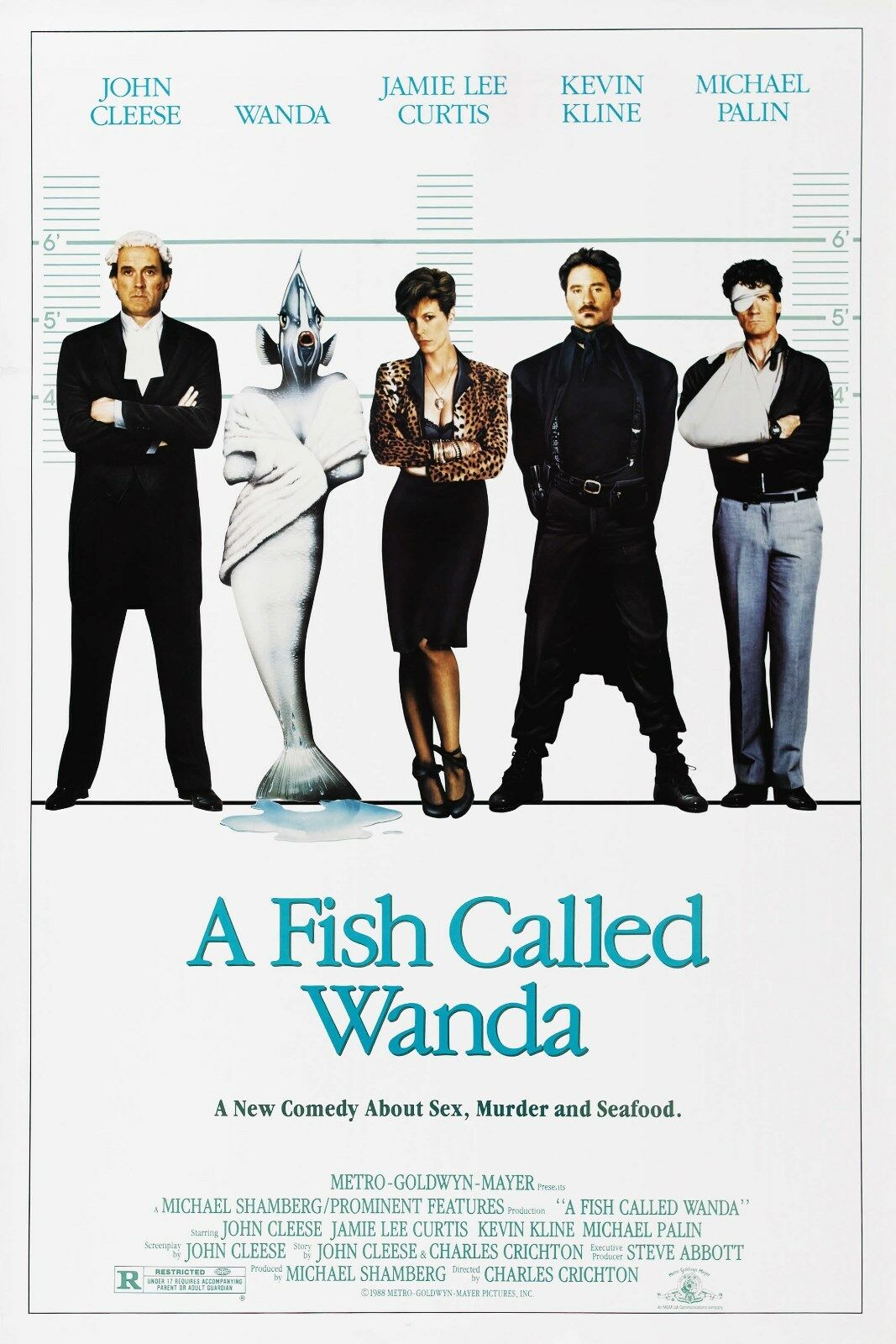
A screenplay should have multiple turning points that shift “the plot into a new, different and unexpected direction.” Turning points can surprise the viewer and keep them engaged with the film. We will look at two major turning points in Charles Crichton’s A Fish Called Wanda. Both involve Archie (John Cleese), the main protagonist.
At the start of Act Two (33 minutes), Wanda (Jamie Lee Curtis) visits Archie at his office and propositions him. This turning point results in a major change in the plot. After this, Archie has an affair with Wanda.
A second turning point occurs near the end of Act Two (87 minutes). Wendy (Archie’s wife) overhears Otto (Kevin Cline) and learns Archie’s secrets: he stole the locket he gave her and cheated on her. This is ironic because Archie ended his affair with Wanda in the previous scene. We don’t expect him to get caught at this point in the film. This turning point results in another major change in the plot. In Act Three, Wendy will divorce Archie.
Turning points are often events that are beyond the protagonist’s control. In both examples, something happens to Archie: Wanda propositions him, and Wendy discovers his secrets. However, the turning points result in Archie becoming an active protagonist. He chooses to have an affair, and when Wendy divorces him, he runs away with Wanda to South America.
 Christopher John Lindsay