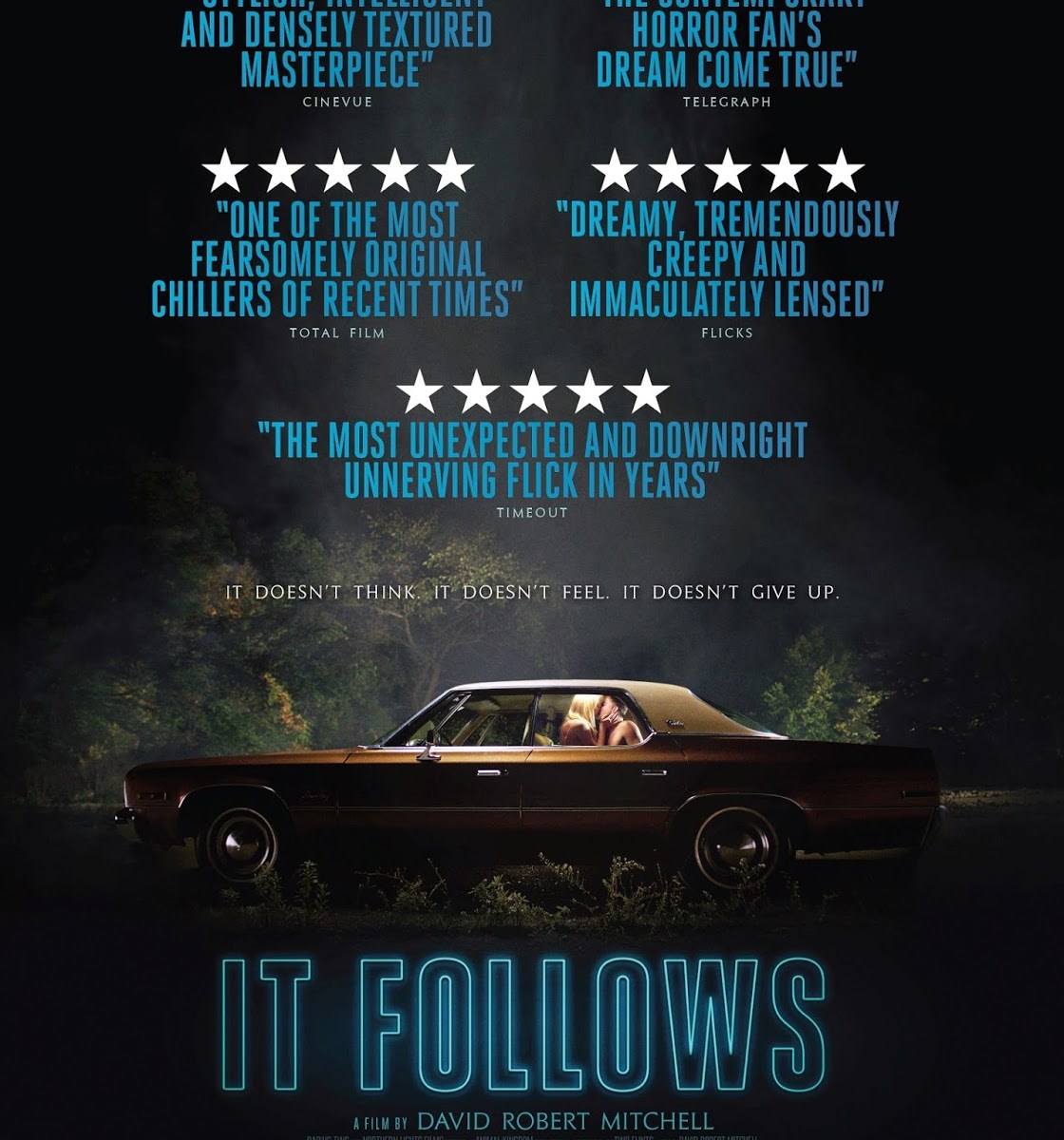

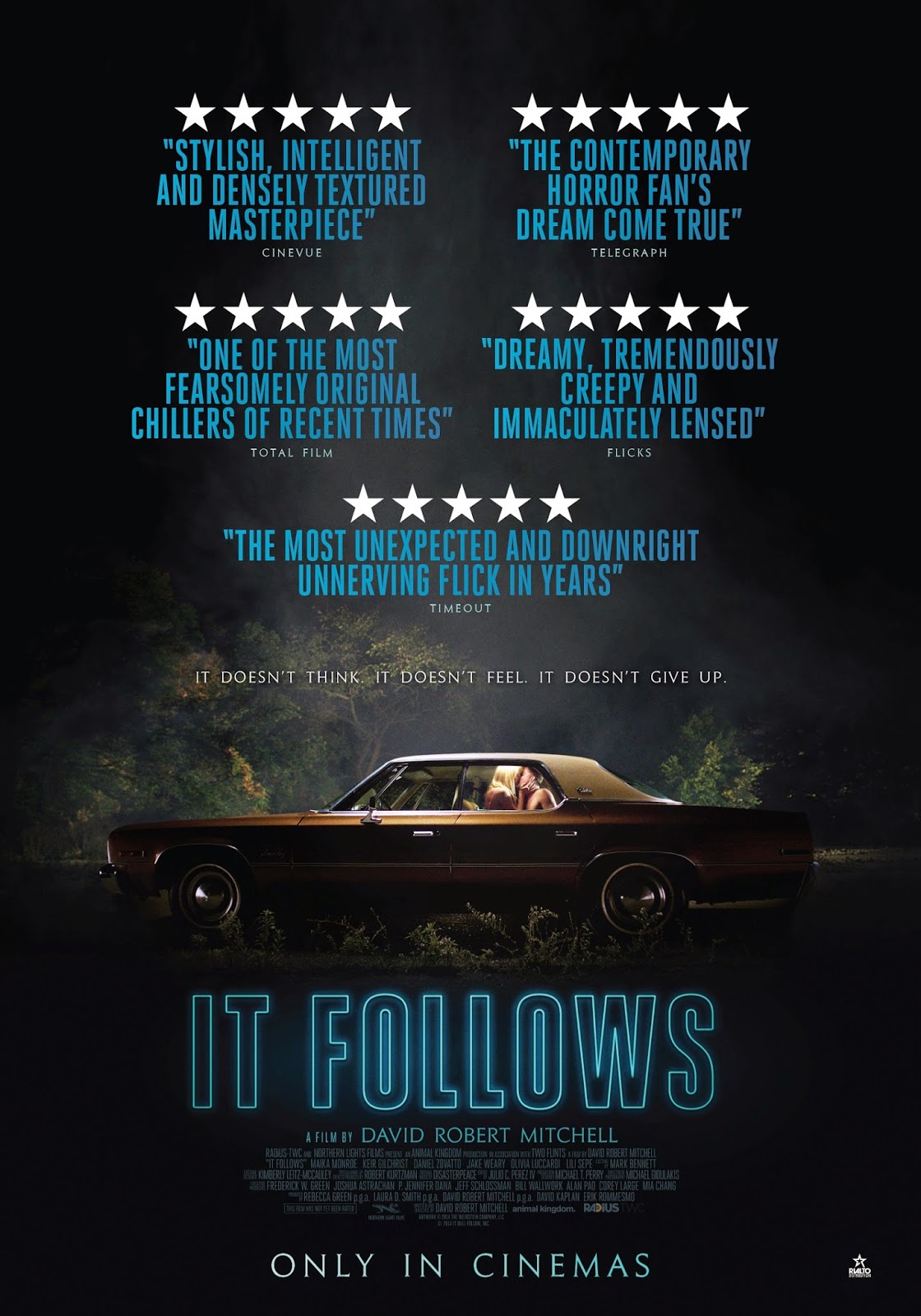
In David Robert Mitchell’s It Follows (2014), Jay (Maika Monroe) goes on a date with Hugh (Jake Weary), and after they have sex, a monster starts following her. Interpreted allegorically, the film is a warning against the dangers of casual sex with the monster representing a sexually transmitted disease.
The film suggests that if you have sex with the wrong person, it can have devastating consequences. After Jay has sex with Hugh, the shape-shifting monster that was following him comes after her. There is, however, a short-term solution. The monster will stop following Jay if she has sex with someone else, so she has sex with Greg (Daniel Zovatto). Unfortunately, this only delays the inevitable. The monster kills Greg and then starts following Jay again.
The monster is playing a game. Games have rules, and the monster plays by certain rules: “It” only follows one person at a time, the unlucky individual who had sex with the last person it was following. (The game is like the children’s game of tag where the last person touched is “It.”) The last person who is “tagged” will be motivated to have sex again.
Allegorically, the monster represents a sexually transmitted disease (STD). Hugh says “It” started following him after a “one-night stand.” Like an STD, the monster can only harm people who have casual sex. Two people in a monogamous relationship would never be in any danger from “It.” The monster punishes people who engage in risky sexual behavior.
Casual sex is dangerous because you might get an STD. Despite the possible consequences, the percentage of young people engaging in casual sex is increasing. A 2014 study found that “35% of GenX’ers in the late 1980s had sex with a casual date or pickup (44% of men, 19% of women), compared to 45% of Millennials in the 2010s (55% of men, 31% of women).”1 The increase in casual sex has led to STD rates reaching a record high in the United States.2 In 2015, there were over 1.5 million reported cases of chlamydia, 395,216 cases of gonorrhea, and 23,872 cases of syphilis, with most of the infections among people ages 15 to 24.3 Millions of Millennials have been infected with STDs because of their sexual promiscuity.
Although STDs can often be prevented using condoms, the only safe sex is between two people who are in a monogamous relationship. Unlike casual sex, you can delay having sex until you both go to a doctor and make sure neither partner has an STD. Making sure your partner has a clean bill of health before having sex is the responsible thing to do. It could save you from a life of suffering and possibly even death.
In It Follows, Jay nearly dies because she had sex with Hugh. She didn’t know his sexual history and suffers the consequences of her unlucky choice. In the film’s climax, Jay and her friends try to destroy the monster. Unfortunately, with STDs, this is not always possible. While many STDs can be treated and cured, others will never go away.4
Notes
- Jean M. Twenge et al., “Changes in American Adults’ Sexual Behavior and Attitudes, 1972-2012,” Archives of Sexual Behavior 44, no. 8 (May 2015): 2278, https://www.ncbi.nlm.nih.gov/pubmed/25940736
- Jacqueline Howard, “STD rates reach record high in United States,” CNN, October 20, 2016, http://www.cnn.com/2016/10/20/health/std-statistics-record-high/
- Ibid.
- McKinzie Brocail, “Sexual Healing: Which STDs Can & Cannot Be Cured,” September 11, 2015, STDcheck.com, https://www.stdcheck.com/blog/sexual-healing-which-stds-can-cannot-be-cured/
 Christopher J. Lindsay
I wonder how many of those who saw the film actually took away this lesson.
LikeLiked by 1 person
The message of the film is clear, but I just felt like… do we really need 1 hour and a half to understand such a simple thing that most know already? And those who don’t know it, will they understand it from the film?
LikeLiked by 1 person
My son was just talking about how scary this movie is. Thanks for your perspective on what it is about. Sexual promiscuity and adultery being punished seem to be themes in many works of fiction.
LikeLiked by 3 people
Wow, 1,5 million is a lot, that is more than there are people in my country, Estonia. And the fact that this topic was so cleverly delivered in a horror movie makes you think that these types of movies are far more scary than the sexual education lessons I’ve heard US schools have. We didn’t have those things I guess, but I’m not sure of our numbers as well, so I don’t know how much it affects our millennials.
LikeLiked by 2 people
The film could definitely be interpreted as an allegory for STDs, especially the most insidious, lethal ones, since “it” stalks its victim and kills it. I’m intrigued that you call “it” (the following thing) a monster. I never would have thought to call it that.
LikeLiked by 2 people
It’s a wonder the government hasn’t found you yet and put an end to this “propaganda”. (I’m being sarcastic. Great article.)
LikeLiked by 2 people